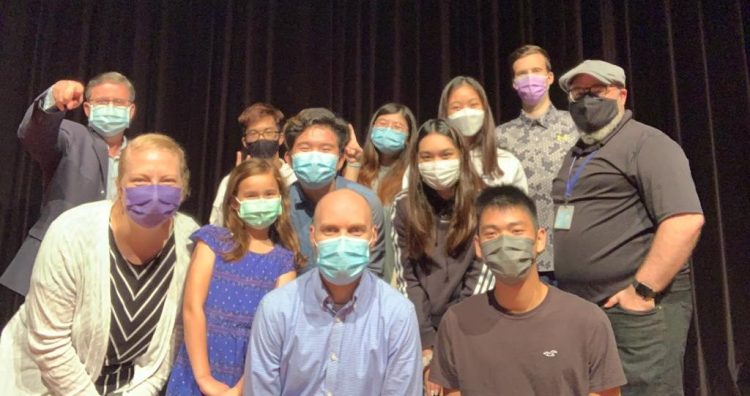
“Dear Josiah, I don’t know if this email is still active. I’ve attached a picture that we wanted to frame for you! It will bring lots of good memories to us and our son. He loves you and truly misses you. We keep you and your family in our prayers. Many blessings to you and thank you for being a great teacher and friend to my son!”
From July 2016 – June 2022 I had the absolute pleasure of serving as a teacher, leader, mentor, and coach at two world-class international schools in Bangkok, Thailand and Hong Kong SAR. I received the email above from one of my former parents at the International Community School, Bangkok. I am thankful that they went out of their way to share their appreciation. Believe me when I say that the appreciation truly was mutual.
The six years that I invested in teaching at international schools were the most formative of my education career thus far. So often when I reflect on the myriad experiences and learnings from that season, I think “I really should write an article to open doors for others to teach at international schools like I did”. Today, I’ve finally seized the opportunity. Without any further adieu I would like to share about my experience and provide information about the current pathways for educators to make the jump to teaching internationally.

Numerous Ways to Work in International Education
There are many ways to teach, support, and lead overseas such as volunteering, tutoring centres, public schools, and international schools. This article focuses specifically on my area of expertise, international schools. For a more comprehensive piece about the other ways to work in education overseas, see this article by Go Overseas (2019).
What are international schools?

In the academic literature, international schools are defined as: private schools with multinational student bodies, teaching staff, board of directors, and curriculum (Terwilliger, 1972). Gellar (1981) gives a less rigid definition of international schools to include two key elements: multinational students and flexible curriculum to meet the goals of the students.
It is essential to understand that numerous factors differentiate international schools from public schools: cultural and socioeconomic demographics of students, transient stakeholders, tuition cost, private vs. public funding, for profit vs not-for-profit organizations, cultural barriers between teachers and students, opportunities to endeavor with best practice, curricular choice, and more professional development resources (Hayden & Thompson, 1995; Squire, 2001).
Due to economic growth and strained national education systems, international schools have been growing in popularity for decades. The most recent data from ISC Research (2022) suggests that the number of English language international schools is over 13,100. Coupled with increased transience in the wake of the pandemic, the current international education market is ripe with positions for teachers and leaders.
It should be noted that international school recruitment season starts in September of the year prior to the position starting. With interviews beginning as early as October. Here’s an example, you’re looking for a Grade 5 classroom position for the 2025/26 school year, start your search in August 2024. This will allow ample time to create accounts/ apply to an agency and have the advantage of seeing jobs as they become available at the start of the season.
There is an even longer runway for international school leadership and head of schools positions. With interviews beginning as early as July. For example, if you’re looking for a head of schools position for the 2025/26 school year, start searching in May 2024. Due to the fact that private school boards prefer to lock in these key positions one year in advance.
My Experience at International Schools

I had the honor of teaching science at the International Community School, Bangkok from 2016 – 2019 and physical education at the International Christian School in Hong Kong SAR from 2019 – 2022.
My wife and I have a calling on our lives in nursing and education respectively and have always wanted to develop our crafts internationally. We moved to Thailand because we felt that God told us that we were going on an “adventure”. We anticipated the adventure would involve building relationships, seeing new places, working, and trying new food. In reality, the adventure involved astronomical growth in our marriage, lifelong mentorships and friendships, significant change to our career trajectories, and deeply enriched our lives.
Here are a few highlights of the rich experience of teaching at international schools: 1) Building strong bonds with incredible students. Sports, clubs, retreats, events, small groups, and classes are just some of the ways these bonds are forged. 2) Working with committed growth-minded educators. The majority of educators that I rubbed shoulders with were constantly pushing their limits to provide excellent education for their students. 3) Having significant resources for professional development. I had the privilege of attending world-class conferences with tremendous speakers, schools, and educators from numerous countries. 4) Accessing counselling and mental health services. Teaching cross-culturally can be stressful, schools recognize this and take steps to take care of their people. 5) Furthering education programs. I benefited from such programming and worked toward a Master’s degree in Educational Leadership and Administration while teaching in Thailand.
How to Secure a Position at an International School
I know what you’re thinking, “OK, I get it, serving at international schools is the pinnacle of the education world. But how do I do it? How do I get there? Do I need a fairy godmother?”
Although I wouldn’t consider myself a fairy godmother, I can help! Let’s start with what you can do right away.
Who Do You Know?
Just like one of my heroes, Jeff Henderson, discusses in his book What to Do NEXT (2022), there is great power in “leveraging your network”. Is there someone in your network who has an international school connection? Be brave, shoot them an email, set up a meeting and learn more.
What Have You Done?
I’m confident that you’ve done more incredible things in your career than you can recall right now or than you could think to write down on your resume. Building your professional resume isn’t just an exercise for when you’re applying to a job. It’s an annual exercise for anyone looking to represent themselves in an accurate way. In fact, pause this article, take 10 minutes right now, open up your resume document (or create one, if you haven’t already) and update that sucker! Think to yourself: How have I improved recently? What student achievements am I proud of? Do I have any new degrees, certifications, conferences, projects, or publications that I can share? What else should I add in order to make this resume an accurate representation of my professional experience?
Seek New Learning

Another key step in helping you prepare for and apply to international schools is to seek new learning. Maybe you just completed updating your resume and you’re thinking, “this thing could use some more substance”. Or “hmmm, my qualifications are getting a bit outdated”. But you don’t know what to do next. Consider finding a blog, course, certification, or degree program that piques your interest and sign up! Investing in your personal education, being a life-long learner is a powerful practice that is a great example for the students in our classrooms to follow. Think of all the benefits that your new learning can bring and how good it will look to prospective international employers.
Apply Directly to Schools
If you have a particular region or country in mind you can monitor the websites of individual schools for their job postings. Some schools will post on their websites as well as on LinkedIn. It is free to search for jobs this way, but does require regularly checking numerous websites.
Use Databases or Agencies
A more efficient way to search for positions at international schools is using online resources which provide a variety of services in the international education space. I have procured some of the best and divided them into two categories, Databases & Agencies. All information and prices below were current as of the date of publishing. Please note, the content on this website does NOT involve paid partnerships. The companies linked in this article are to help you on your journey.
Databases: Platforms that connect schools and educators via job postings and application links.
- Education software company with their hand in a variety of education pies such as a magazine, resources for teachers, significant database of education job postings, and professional development
- For teachers, support positions, and leaders
TES Subscription Information:
- Free
- Access to the world’s largest database with currently over 12,000 job postings* from around the world. *Schools in the UK make up the majority of the postings
- The database has over 3,000 international positions
- Publicly traded education technology company with an international recruitment database service
- For teachers
Schrole Subscription Information:
- Free
- Access to the database, but limited to just 3 applications
- Paid $50 USD/ year.
- Access to a database of 5,000 positions from 400 international schools around the world
- Access to virtual events
- The world’s largest accreditor of Christian schools
- For Christian teachers, support positions, and leaders
ACSI Subscription Information:
- Free
- Access to their jobs database with all ACSI positions, domestic and international
- Access to individual International School Vacancies categorized by continent
4. Christian Schools International (CSI)
- World leader in Christian education services
- For teachers, support positions, and leaders
CSI Subscription Information:
- Free
- Access to their Job Board with North American and international positions.

Agencies: Companies that provide a database service plus additional value in terms of reputation, connections, and sometimes job fairs.
- Search Associates (Search)
- The “top dog” in the international school recruitment yard
- For teachers, support positions, and leaders
- The agency partners you with an “Associate” to help with your international education search. I used Search in 2019 and attended a job fair in Bangkok, was offered a position in Abu Dhabi, UAE, but ended up accepting a position in Hong Kong instead
Search Subscription Information:
- Paid: $225/ for 3 years (or until you get your first position through their service)
- Access to a database of thousands of positions from 750 international schools around the world
- Job fairs in locations like: Toronto, San Francisco, London, Dubai, Singapore, Bangkok, Melbourne, and Hong Kong (2023/24)
- A multifaceted education organization that provides a database for the purpose of connecting educators and international schools
- For teachers, support positions, and leaders
ISS Subscription Information:
- Paid: $75 USD/ year
- Access to a database with positions from over 100 countries
- Job fairs in locations like: Atlanta and New York City (2023/24)
- A small recruiting agency which has a database, publishes articles, and newsletters
- For teachers
TIE Subscription Information:
- Paid: $49+ USD/ year
- Access to a smaller database with positions from around the world

Final Thoughts
If you’re interested in applying for positions at international schools, one or more of these services is the way to go. If I was starting my search today I would use a combination of TES, Search Associates, and ISS. This would give me access to the most possible positions as well as the highest powered agencies in order to find the best fit for my family. Which is worth far more than the cost of the agency fees.
If you’re considering applying to an international school, I may be of service. There is plenty more to discuss that I did not have time to cram into this article. Please contact me if you have any questions about international schools.
Thank you for taking the time to read this article. It was a pleasure spending time with you today.
Peace & Blessings,
– Josiah
References
Gellar, C. (1981). International Education: Some Thoughts on What It Is and What It Might Be. The International Schools Journal, 0, 21–26.
Hayden, M., & Thompson, J. (1995). International Schools and International Education: A relationship reviewed. Oxford Review of Education, 21(3), 327–345. https://doi.org/10.1080/0305498950210306
Henderson, J. (2022). What to do next: Taking your next best step when life is uncertain. Zondervan.
ISC Research. (2022, August 16). The New International School Data for 2022. ISC Research. https://iscresearch.com/international-school-data-for-2022/
Squire, L. (Ed.). (2001). School Improvement and Professional Development in International Schools. In Managing International Schools (1st ed., pp. 105–122). Routledge. https://doi.org/10.4324/9780203482032-17
Terwilliger, R. I. (1972). International Schools—Cultural Crossroads. The Educational Forum, 36(3), 359–363. https://doi.org/10.1080/00131727209338990
 Josiah Marr Consulting
Leave a comment