I originally wrote this article in May, 2018.
According to the UN Refugee Agency (UNHCR) (2018) a refugee is “Any person forced to flee from their country by violence or persecution”. Canada’s history of humanitarian aid is extensive. As a Canadian, growing up I was told that to be Canadian was to be fortunate. As I’ve gotten older I’ve realized that this is true. Travelling abroad as a Canadian is often easy. When locals hear that I am Canadian it is as if I am instantly respected. I am often met with comments such as “Oh, very nice” or “Canadians are so nice”. I have attributed the respect that I receive around the world to Canada’s peacekeeping and refugee harbouring history. However, in the case of refugees, Canada’s humanitarian national identity can cause unintended pain and prolonged suffering as opposed to helping refugees when they are in need.
Olsen, El-Bialy, Mckelvie, Rauman, & Brunger (2016) make intriguing points about Canada’s national identity and refugee relations, ”The existence of this national identity however, depends for its existence on the image of refugees as helpless and vulnerable; the more dire the ‘refugee’ experience appears, the more commendable and virtuous Canadian humanitarianism becomes. In this sense, the construction of the ‘refugee’ identity as one who is voiceless, homeless, helpless, and vulnerable is essential in maintaining the national identities of countries of the global North as charitable and humanitarian” (p.62).
According to the UNHCR, there are over 28 million refugees worldwide (2020). Every one of these refugees is a real person in need. But every refugee case is different. Some refugees that are protected under the UNHCR’s mandate (UNHCR, 2004). These refugees are relocated to a safe country where they are no longer in need of coddling and are able to thrive on their own. To be sure, refugees are people in need of help. But, not all refugees are helpless, they are not all uneducated, and they are certainly not all “bogus” (Olsen et al., 2016). Olsen and collaborators (2016) do not suggest that all refugees are bogus, but highlight that the changes to the Canadian Interim Federal Health Program (IFHP) have been created based on the fear of being exploited by “bogus” refugees.
Refugees, like all other people on earth are individuals. Assuming that all refugees are the same with their lives and hopes in shambles is entirely unfounded. Worldwide, refugees come from countries and people groups that are more varied than the Canadian mosaic itself. They bring incredible skills and experience to their new countries. They should be celebrated and not kept in a dilapidated box labeled “refugees”.
According to Olsen and co-authors (2016), Canada’s IFHP changes for refugees consist of: increased refugee categorization, refugee status claim de-legitimization, and drastically limited healthcare coverage. Sadly, these cuts and categorizations will only serve to hurt refugees in Canada. It’s like taking candy from a baby, then pinching the baby to make it cry, insult to injury.
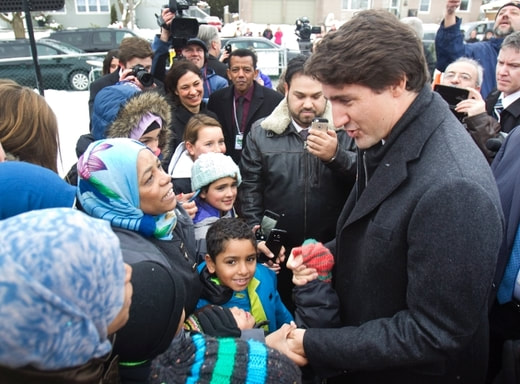
Refugee children, in Canadian schools, are most affected by all of the prescribed labels, rules, and assumptions mentioned above. Children do not choose where they live, how much money their family has, or even what clothes they wear. Refugee children therefore receive the brunt of the dominant Canadian assumptions placed upon them. They are bullied for the fact that they are different or a threat to the Canadian way of life. This is an externalization of the biases (visible and invisible) that their peers, teachers, and the dominant culture around them possess. In Canadian classrooms refugees are painted with the wide brush of suffering and helplessness, these messages are taught to both refugee students and their peers. Sadly, these messages perpetuate the cycle of misinformed socially constructed refugee identities.
In order to help with each individual educator’s understanding of refugee students and how to help them thrive, Canadian and International educators alike should ask themselves questions like: As we seek to peel off labels, break down assumptions, and combat unjust rules, how do we give voices, belonging, and strength to the refugee students in our schools?
Thank you for taking the time to read this article. It was a pleasure spending time with you today.
Peace & Blessings,
– Josiah
References
Olsen, C., El-Bialy, R., Mckelvie, M. et al. (2016). “Other” Troubles: Deconstructing Perceptions and Changing Responses to Refugees in Canada. Journal of Immigrant Minority Health 18(1), 58–66. https://doi.org/10.1007/s10903-014-9983-0
UNHCR. (2004). UNHCR Global Appeal 2004. UNHCR. https://www.unhcr.org/3fc754593.pdf
UNHCR. (2018) What is a Refugee? UNHCR. https://www.unrefugees.org/refugee-facts/what-is-a-refugee/
UNHCR. (2020). Figures at a Glance. UNHCR. http://www.unhcr.org/figures-at-a-glance.html
 Josiah Marr Consulting
Leave a comment